Turn building history into usable evidence
The history of a Josefstadt building may be scattered across many documents. A valuation benefits from a clear sequence: original configuration, later alterations, completed refurbishment and present use. An old drawing does not necessarily describe the current building, so the source and status of each statement should remain visible.
This chronology helps place technical findings in context and identify questions precisely. Owners can see which characteristics are documented. Historic character becomes an examinable account of the building’s development, without requiring the construction date alone to support an economic conclusion about value or future expenditure.
Record outdoor space precisely
Courtyards and other outside areas may attract particular attention in the densely built eighth district. Valuation nevertheless depends on their actual situation. What area exists, how is it reached, who may use it and what condition is it in? A photograph alone cannot answer these questions.
A possible future landscaping idea should also be separated from current usability. The documents should make these distinctions clear before assessing the contribution to individual units or the building overall. An automatic premium would skip the prerequisites that determine whether the space is practically useful and available as described.
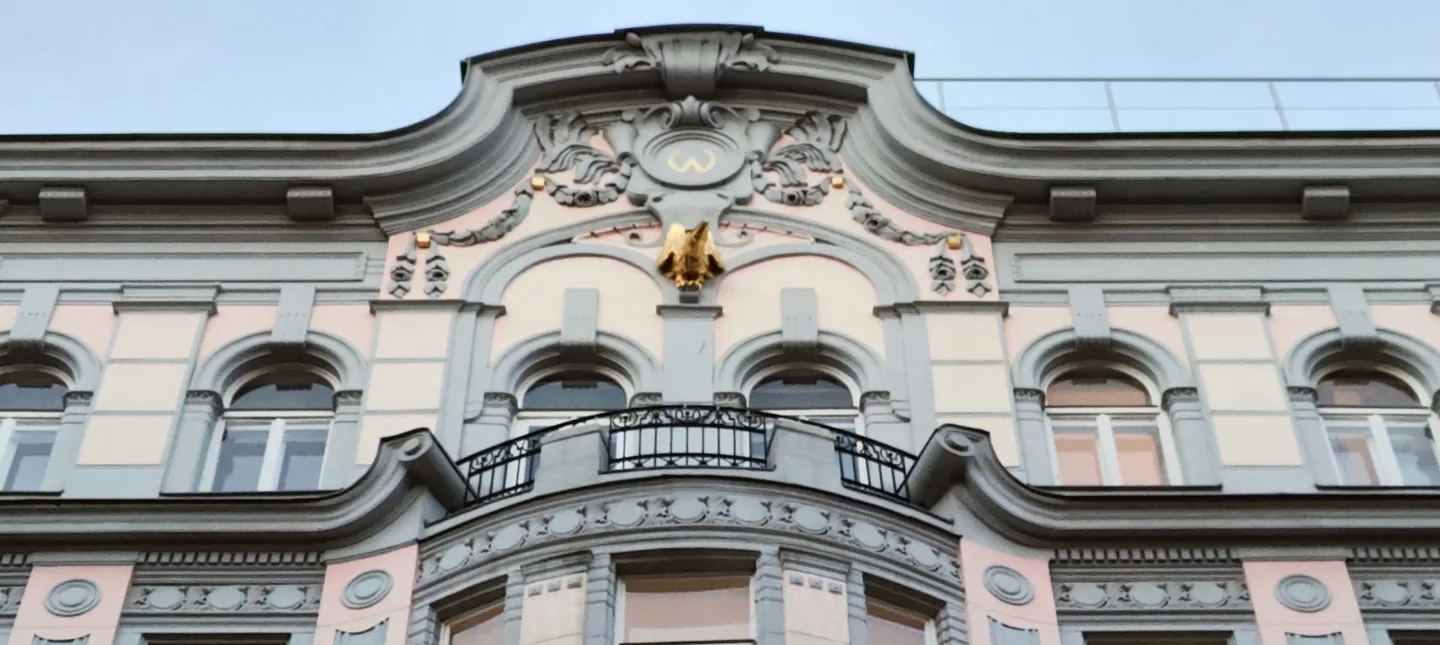
Treat the attic as a separate investigation
An unconverted attic begins as existing space with a particular condition and documented status. If conversion is considered, its prerequisites need their own investigation. These include planning conditions, physical feasibility, access, possible protection requirements, costs and timing dependencies.
The valuation should not calculate as though additional lettable accommodation already exists. A clear distinction between confirmed existing space, a specifically investigated scenario and an initial idea is more useful. Owners can then understand which part of a value argument is evidenced today and which might become supportable only after further work has been completed.
Josefstadt.
Your building in context.
- 01Josefstädter Straße
- 02Piaristenviertel
- 03Breitenfeld
- 04Strozzigrund
Josefstadt is Vienna’s smallest district by area and has a substantial historic residential building stock. Josefstädter Straße connects its city-centre side with the Gürtel, while closely interwoven residential streets include historic areas such as Breitenfeld and Strozzigrund. For owners, this compact structure does not mean uniform conditions.
Street position, courtyard orientation, layouts and access can change materially within a few buildings. The district’s limited green space makes any private outdoor area worth examining specifically, without assigning it an automatic price premium. A careful assessment of Josefstadt therefore connects historic fabric with the practical question of how well the individual building meets present-day requirements and what work it may need over time.
What owners should examine
Mark the topics for which you already have documents. Use “Save preparation” to keep your selection on this device. It is not sent anywhere.
For historic buildings, the sequence of completed works can be more informative than construction age alone.
Invoices, building notifications and approvals, service records, condition report
A courtyard or roof area needs clear access, use rights and condition information.
Plans, use agreements, approved status, photographs and measurements
Even within the small eighth district, street conditions, orientation and access can vary materially.
Justified location comparables, floor plans, surroundings and entrance photographs
Proposed additional accommodation should not be treated as existing lettable area.
Building file, zoning review, design status, preliminary structural and economic assessment
Understand the location: Josefstadt
Josefstädter Straße · Piaristenviertel · Breitenfeld · Strozzigrund
Map view for orientation, not a property location.
Your questions. Clear foundations.
Does a historic Josefstadt building automatically imply substantial refurbishment needs?
No. Age is not a substitute for a condition assessment. Completed works, technical reports, maintenance and remaining tasks matter. A well-maintained older building needs a different assessment from one with deferred repairs.
How is an unconverted attic treated?
First record the space in its actual condition and status. Any conversion requires a separate assessment of feasibility, approvals, costs and timing.
An initial market appraisal does not replace a formal valuation report or individual legal or tax advice.
Sources & context
Linked sources support local and factual information. Property-specific review questions are editorial analysis. Rent, planning and development assumptions require examination of the individual building.
Editorial review: 13 November 2026